
Orthopaedic trauma
Orthopaedic trauma concerns the treatment of fractures and injuries of the musculoskeletal system following an accident or an impact. Trauma surgery has become a specialisation in its own right within orthopaedics. A knee surgeon is highly competent in treating joint wear, such as prosthetic surgery, or cruciate ligament injuries in athletes. The treatment of a complex fracture of the tibia or femur involving the joint is a completely different type of surgery, requiring specific skills.
The same applies to other joints. Trauma surgery may also involve associated injuries, such as tendon or skin damage, and may require expertise in plastic and reconstructive surgery, for example skin grafting.
The surgeon systematically analyses X-rays and CT scans in order to categorise the fracture and define the most appropriate treatment.
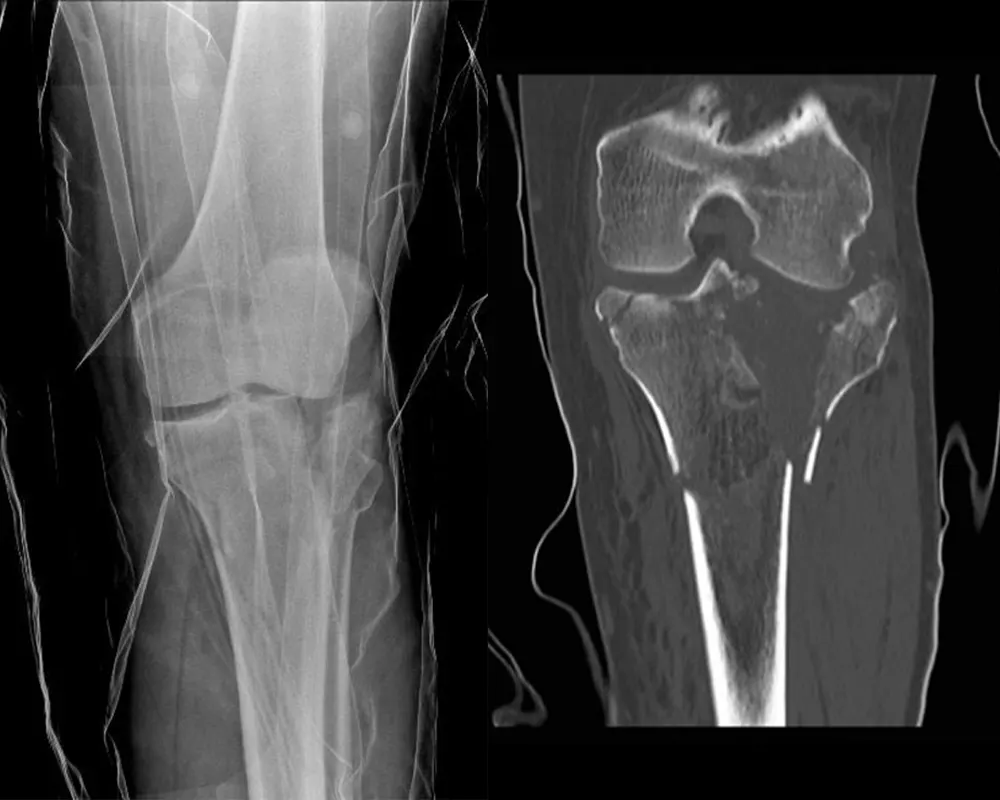
Left : Fracture of the tibia at knee level, CT scan
Right : Fracture of the tibia at knee level, X-ray
Understanding trauma surgery
Trauma surgery treats injuries caused by a sudden trauma. These situations require a rapid and structured assessment.
Injuries may affect different anatomical segments : pelvis, hip, knee, foot, as well as associated ligament and joint structures. In the context of pelvis and hip surgery as well as knee and foot surgery, the primary objective is to establish a precise diagnosis based on the clinical examination and medical imaging. This analysis makes it possible to determine whether conservative treatment is sufficient or whether surgery is indicated.
Assessment and therapeutic decision
Every treatment begins with a detailed clinical assessment. I examine the pain, mobility, stability and neurovascular status of the affected limb. Medical imaging examinations, including X-rays, CT scans and MRI scans, complete the assessment and make it possible to define precisely the type of fracture or injury.
The decision to treat surgically is never systematic. Many fractures can progress favourably without surgery. Surgery is necessary when displaced fragments in a fracture need to be repositioned, which is known as fracture reduction, and when the anatomy before the trauma needs to be restored. Surgery is also useful to stabilise a trauma and allow mobilisation, with or without weight-bearing on the lower limb, as quickly as possible.
Many principles must be respected : the technical quality of the reduction, the stability of the surgical fixation, and respect for the muscles and skin. The aim is to obtain a result as close as possible to the initial condition, before the trauma.
Open and/or complex fractures should systematically be treated by a specialist in trauma surgery.
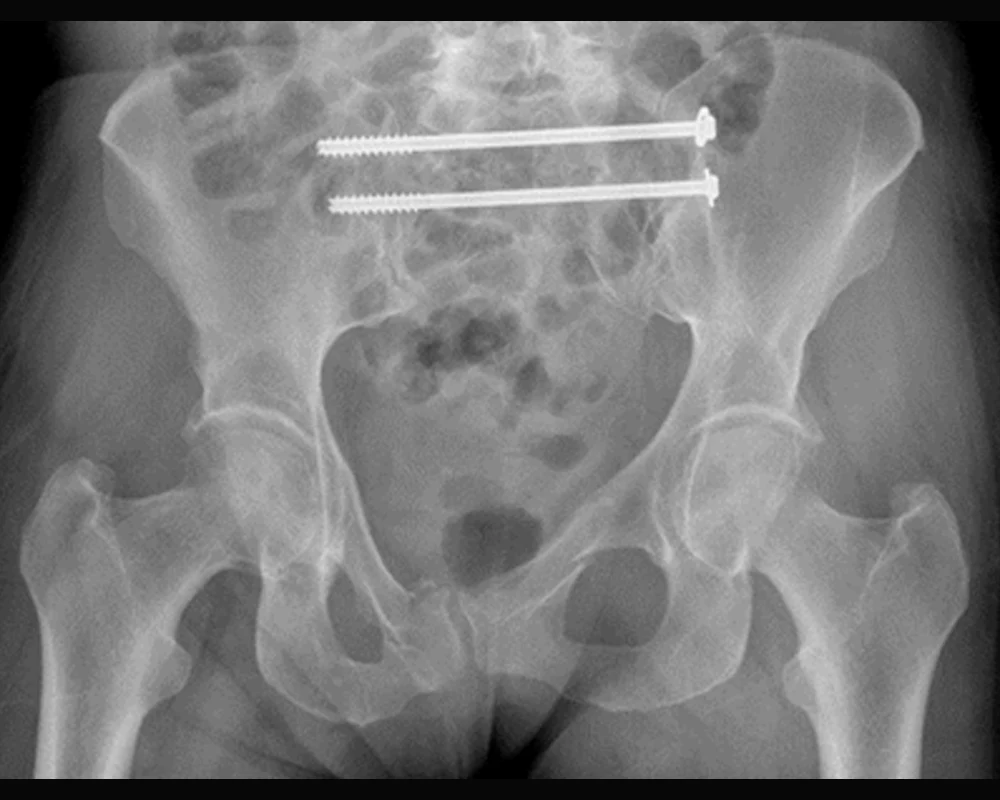
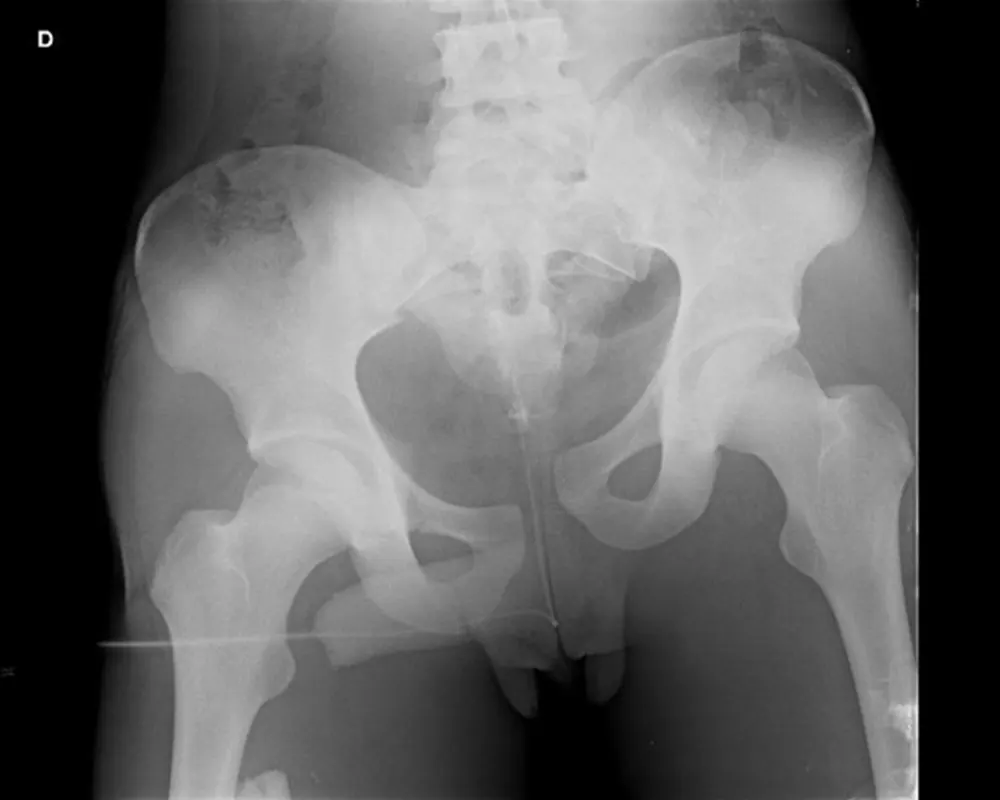 Pelvic fracture
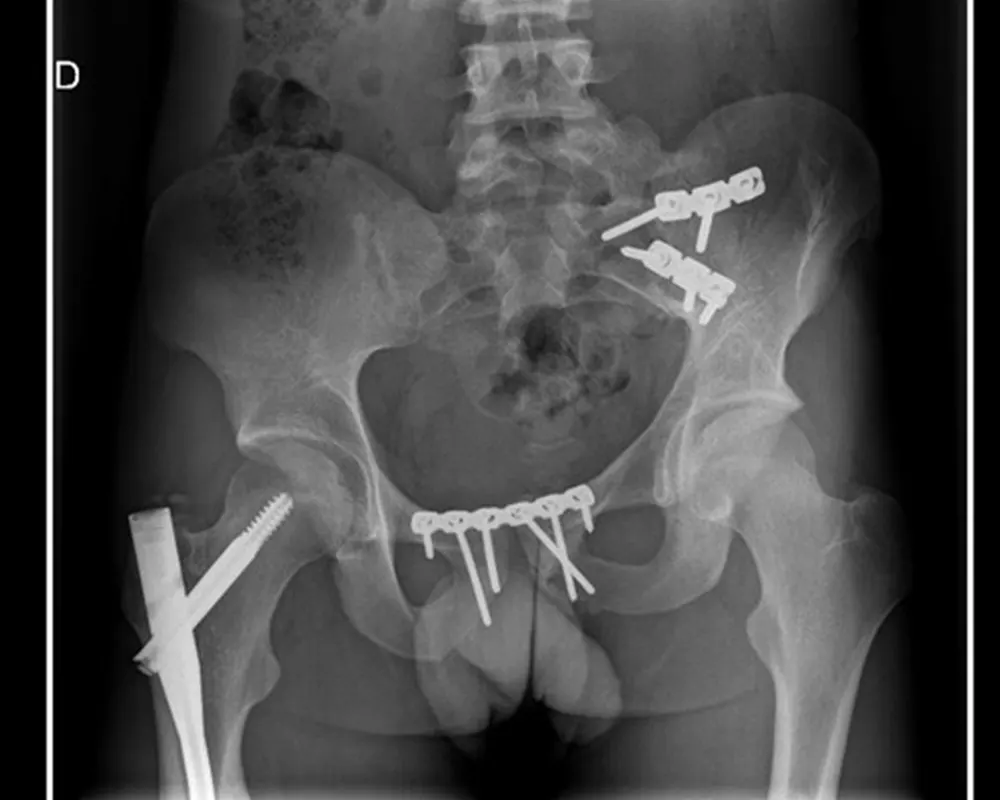 Pelvic X-ray just after surgery
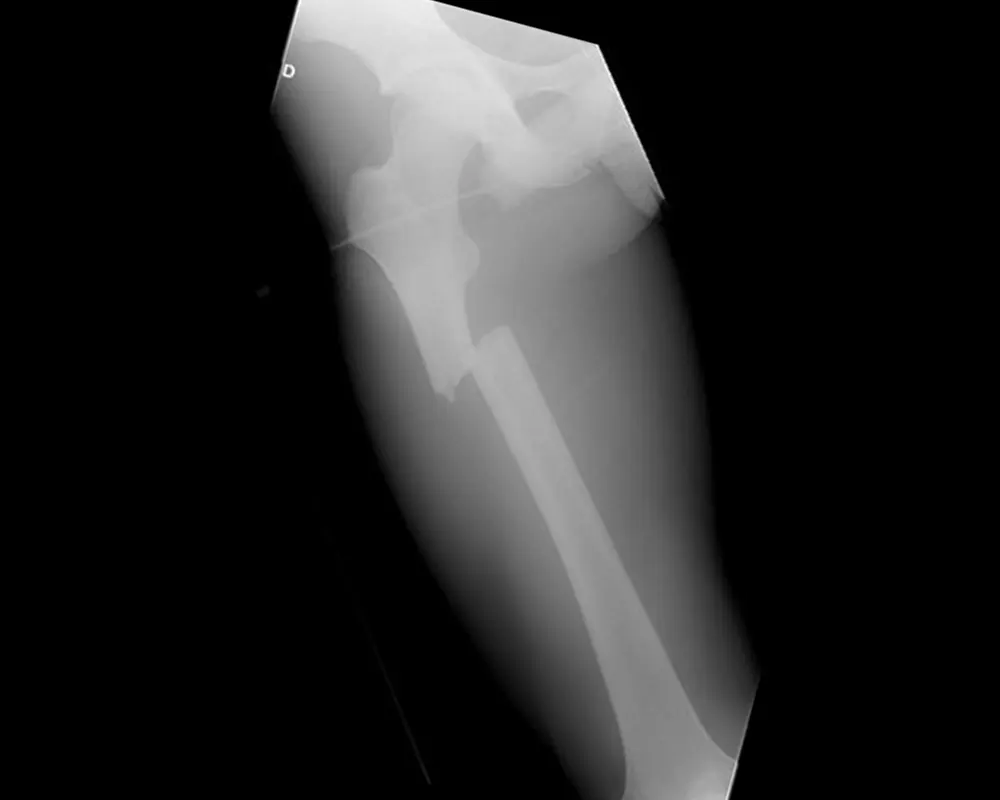 Fracture of the right femur
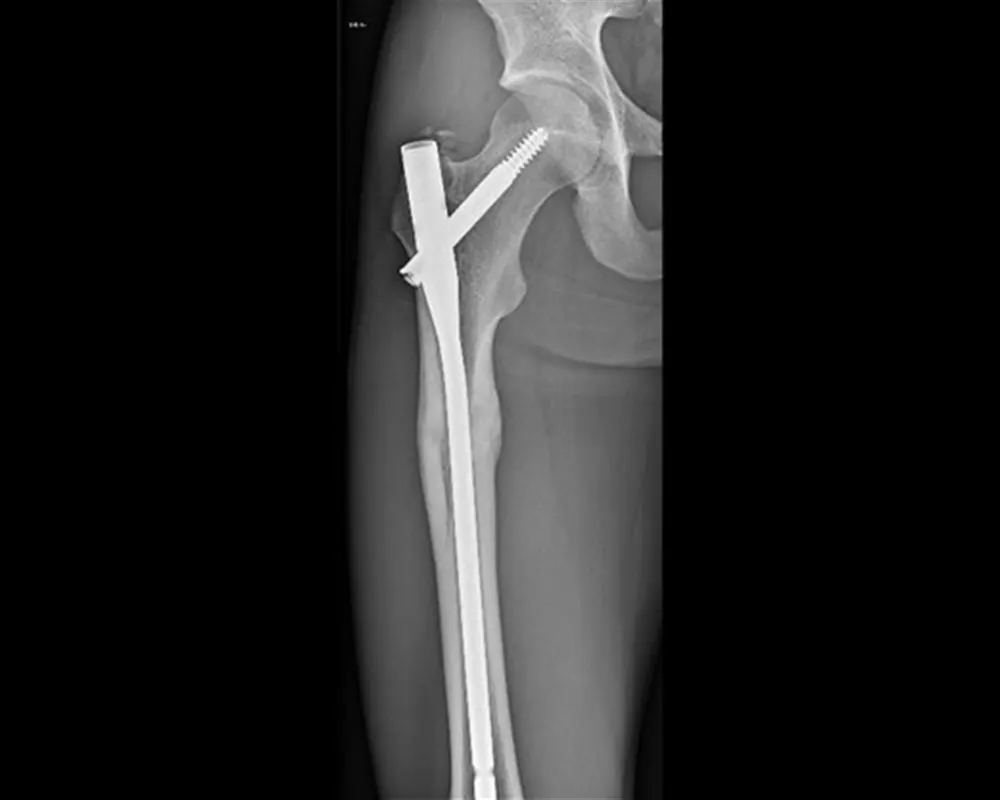 X-ray of the femur, solid 6 months later
Main injuries treated
In practice, the situations encountered in trauma surgery are varied. In particular, I treat :
- Pelvic fractures
- Hip fractures
- Knee and kneecap fractures
- Foot and ankle fractures
- Certain joint dislocations
- Ligament injuries associated with trauma
Each injury has specific anatomical and biomechanical characteristics. Treatment aims to restore bone alignment, ensure stability and allow progressive functional recovery. Depending on the case, this may involve immobilisation, orthopaedic reduction or surgical fixation.
When surgery is necessary, its aim is to stabilise the injury under optimal safety conditions. This allows rehabilitation and a return to activities as quickly as possible and with the fewest possible after-effects.
Follow-up and recovery
The post-traumatic phase is decisive. Medical follow-up makes it possible to monitor bone healing and adapt the resumption of weight-bearing or movement. Collaboration with rehabilitation teams may be proposed when indicated.
The objective always remains functional: to allow the patient to regain mobility compatible with daily activities, while respecting the biological healing time.
Frequently asked questions
How long does bone healing take ?
In the case of cast immobilisation, an average of 6 weeks should be expected for a wrist, forearm or ankle, and 8 to 10 weeks for a tibia or humerus, the bone of the arm.
Femur fractures are almost systematically operated on to avoid immobilisation. The bone is solid enough to be used without restriction after 12 to 15 weeks.
Can weight-bearing be resumed after fracture fixation ?
This depends on the type of injury and the treatment. It is an objective that is aimed for as often as possible in lower limb trauma surgery.
When should you consult an orthopaedic surgeon after trauma ?
It is recommended to consult an orthopaedic surgeon in case of persistent pain, visible deformity, inability to bear weight or significant limitation of movement after an accident or impact.